
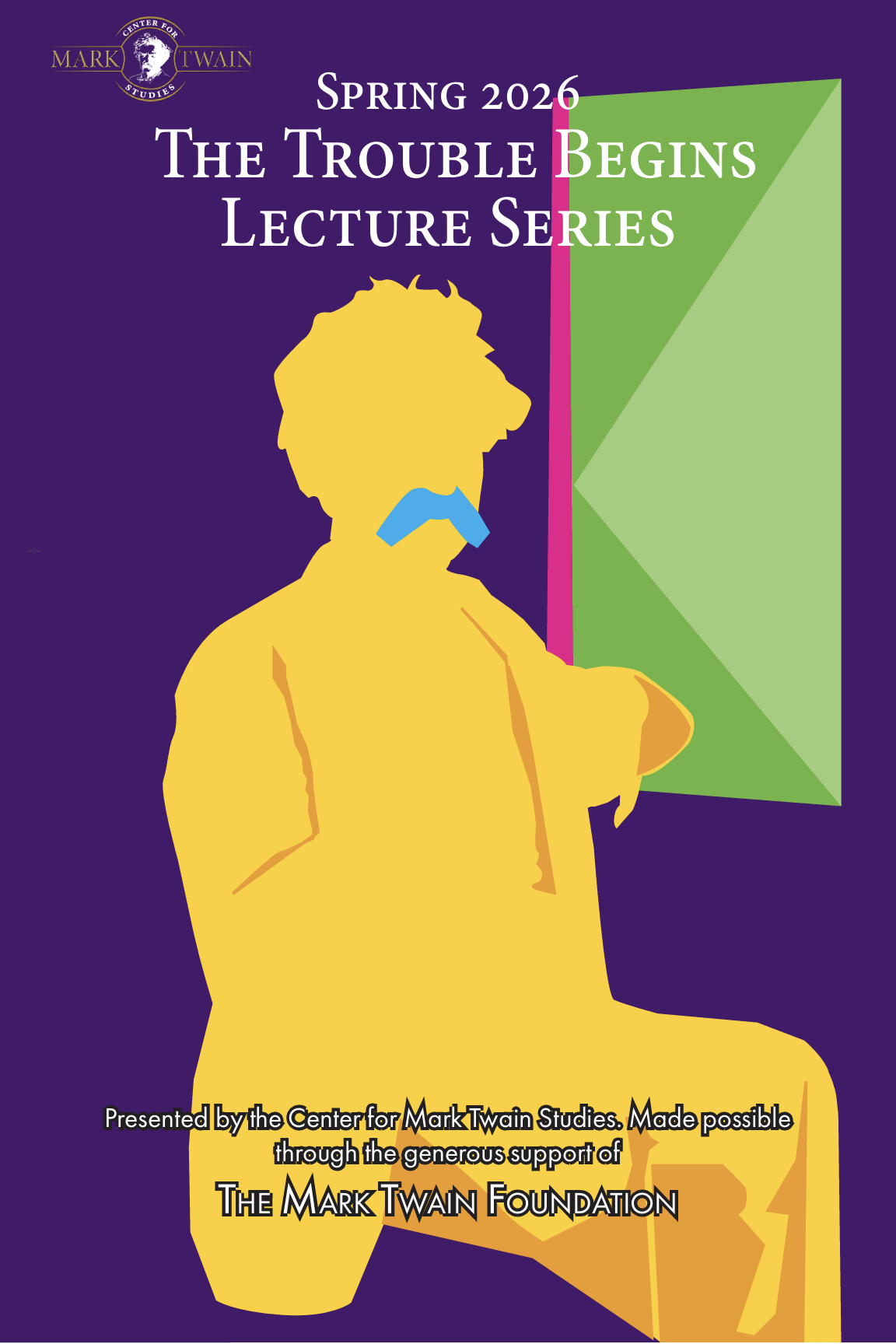
Image created by Angelina Addison ’28,
CMTS Digital Design Intern
All Trouble Begins and Park Church Lectures are open to the general public at no charge.
A videorecording of all Trouble Begins and Park Church Lectures will be posted and archived in the Trouble Begins Lecture Archive.
The 2026 Trouble Begins and Park Church Lecture Series is made possible throught the generous support of the Mark Twain Foundation.
Wednesday, May 6 in the Quarry Farm Barn
“‘You think you’re better’n your father?’: Mark Twain and John Marshall Clemens”
Ann M. Ryan, Le Moyne University
In his autobiography, Mark Twain writes with warmth and wit about his mother Jane Lampton Clemens, and she surfaces again in his fictional representations of devoted mothers and loving aunts. His father John Marshall Clemens, however, is present in Twain’s memory as an absence, or maybe better yet, as a cipher—an unknowable, impenetrable icon. Twain writes of his father:
My father and I were always on the most distant terms when I was a boy—a sort of armed neutrality, so to speak. At irregular intervals this neutrality was broken, and suffering ensued; but I will be candid enough to say that the breaking and the suffering were always divided up with strict impartiality between us—which is to say, my father did the breaking, and I did the suffering.
The young Sam Clemens is only twelve years old when his father dies; yet, the adult Mark Twain continues to do battle with his father, breaking and suffering, for the rest of his life. No matter the incarnation—Pap Finn, Judge Driscoll, John Canty, Colonel Grangerford—Twain’s fathers share a number of qualities: they treat children like property; use shame and intimidation to discipline; and if they are not the direct instrument of violence, they are, nonetheless, the source of it. By the time of his death in 1847, John Marshall had moved his family from Kentucky, to Tennessee, to Missouri, bought and lost homes, opened and closed businesses, and treated slaves like poker chips to be cashed in when liquid funds were needed—and they were always needed. What emerges from the memories of those who knew John Marshall Clemens is a portrait of a dual personality, at once fragile and stern, idealistic and foolish, studied and rash. In other words, John Marshall may have been the first Clemens to also be a “twain.” And while Twain occasionally exposes his father’s temper and satirizes his ambition, he spends a lifetime trying both to rebel against and embody the values of John Marshall Clemens. In her talk for the “Trouble Begins” series, Dr. Ann M. Ryan will explore Twain’s tense, fraught, longing relationship with his father, and how it haunted both his life and his fiction.
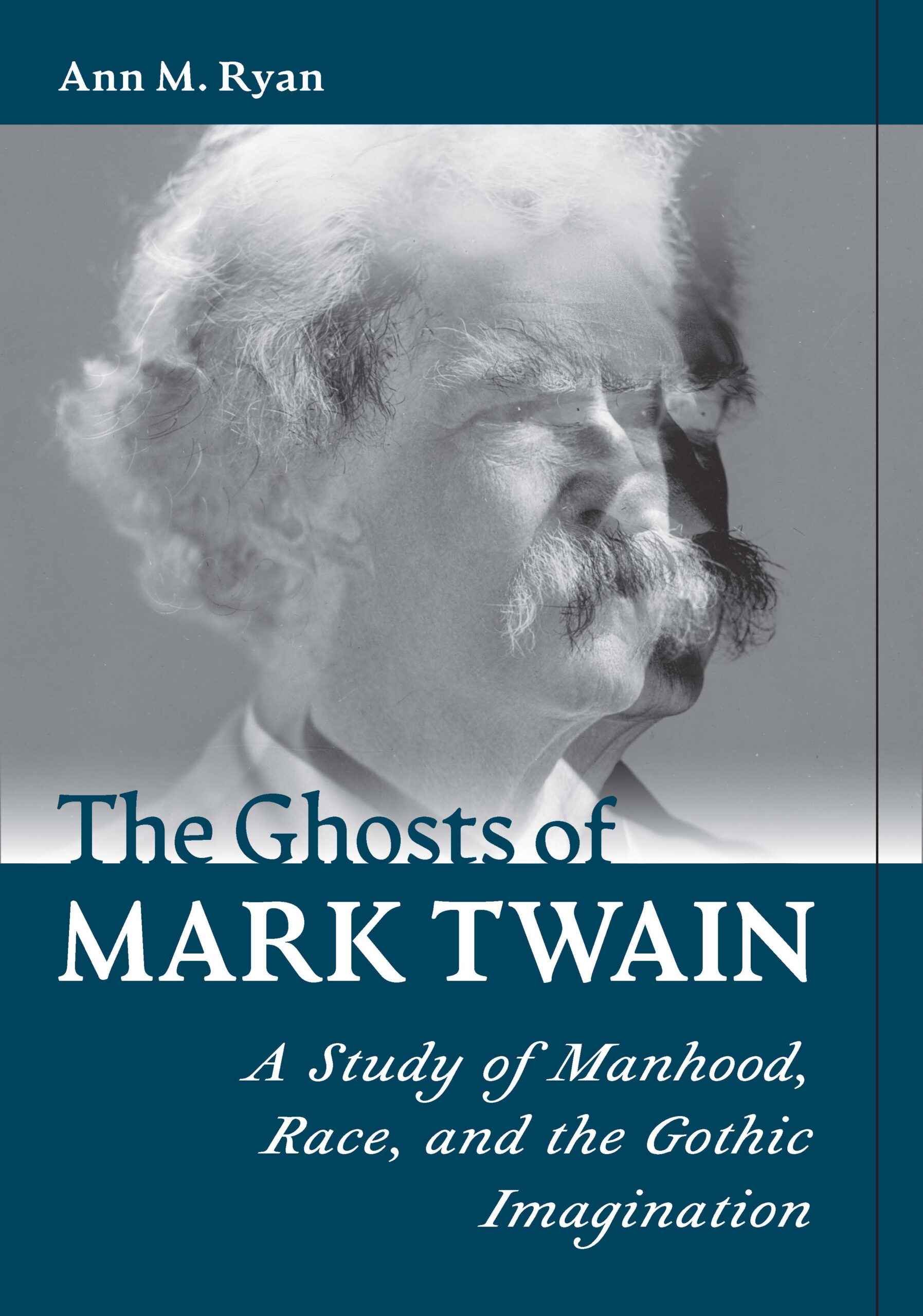
Ann M. Ryan is Professor of American Literature at Le Moyne College in Syracuse, New York. She is the past president of the Mark Twain Circle, the former editor of The Mark Twain Annual, and co-editor of Cosmopolitan Twain. She is the author of The Ghosts of Mark Twain: A Study of Memory, Masculinity, and Race.
Wednesday, May 13 in the Quarry Farm Barn
“‘Mr. Clemens and the Cure: the Rediscovery of a Lost Twain Reminiscence”
John Jeremiah Sullivan, Award-Winning Writer
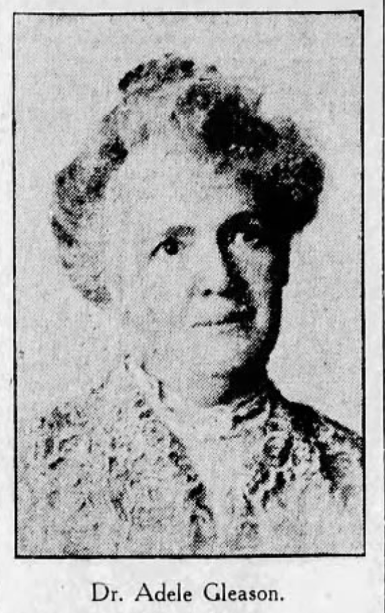
A year ago, while reviewing a new biography of Mark Twain for Harper’s Magazine, I discovered a fascinating and obscure text that was unaccounted for in the existing scholarship. An obituary-essay written just days after his death, the piece appeared in, of all places, a British military newsletter published in Lahore, Pakistan (then a part of India). The roughly 1,000-word essay is intimate, detailed, moving, eccentric, admiring, and includes multiple unfamiliar anecdotes of Twain’s life and personality, as well as stray glimpses of his wife, daughters, and friends. Equally interesting is the identify of the woman who wrote it: a forgotten American doctor and author (of poems, essays, and short stories) named Adele Gleason, who had grown up in Elmira, New York, at her family’s well-known hydropathic “water cure” sanitarium, where Twain took his baths in the summer and liked to spend time. Like Twain himself, Gleason was highly interested in dreams, and the possibility of telepathic communication via the dream state. She was a passionate person, a world traveler, famed for her beauty and deeply involved all her life in progressive causes. She was also a lesbian who fought to live openly in a repressive society. This lecture will attempt to weave together three threads: Gleason’s life and work, the legacy of her remarkable family and of the institution they built in Elmira, and the uniqueness of her perspective on Twain. What can we learn about “Mr. Clemens” by seeing him through the lens of such a brilliant and unusual mind?
John Jeremiah Sullivan is an award-winning writer in multiple genres who lives with his wife and two daughters in Wilmington, North Carolina. His 2011 essay collection, Pulphead, was named one of the 100 best books of the 21st century by the New York Times Book Review. He is the recipient of several awards and honors, including the Whiting Award, the Windham-Campbell Prize, two National Magazine Awards, a Guggenheim Fellowship, and a fellowship at the New York Public Library’s Cullman Center for Scholars and Writers. His next book, The Prime Minister of Paradise, about a forgotten 18th-century utopian experiment, is forthcoming from Random House. He is a co-founder of the Third Person Project, a non-profit research collective dedicated to uncovering the forgotten Black history of the Cape Fear region.
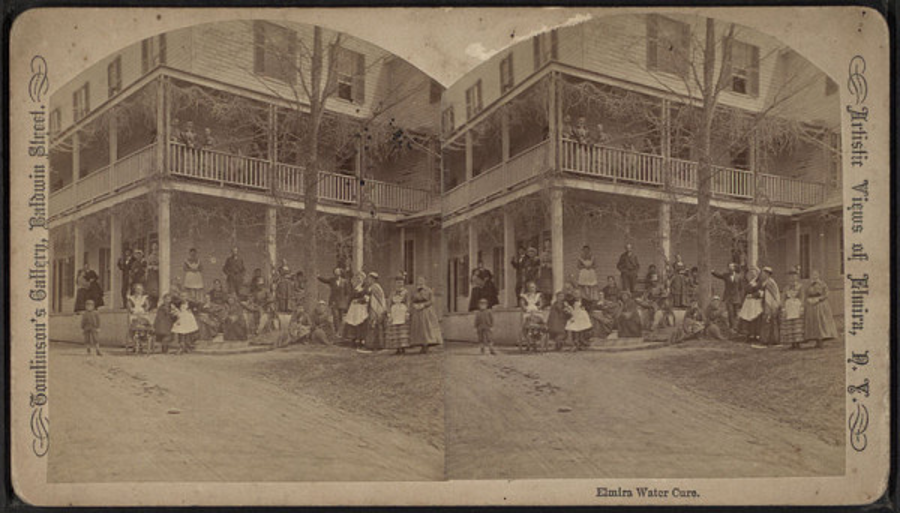
Stereoscopic image of Elmira Water Cure, taken by C.Tomlinson (c.1880)
Wednesday, May 20 in the Quarry Farm Barn
“Seeing Double: Two Poets on their Quarry Farm Stays”
Michael Czarnecki and James Plath
Michael Czarnecki (’25) went to Quarry Farm to create a body of work, both in words and photographs, documenting two weeks at Quarry Farm and attempting to capture the quietness, beauty and spirit of the place. James Plath (’23) went to Quarry Farm to write an essay on how Twain modeled being a celebrity writer for both Ernest Hemingway and John Updike, who became arguably the most visible and ubiquitous writers of their generation. But like Czarnecki, he also ended up writing poems. On May 20 they will read some of their Quarry Farm-inspired poetry, share insights, and talk about what it was like to live and write where Twain composed so many of his best-loved works.
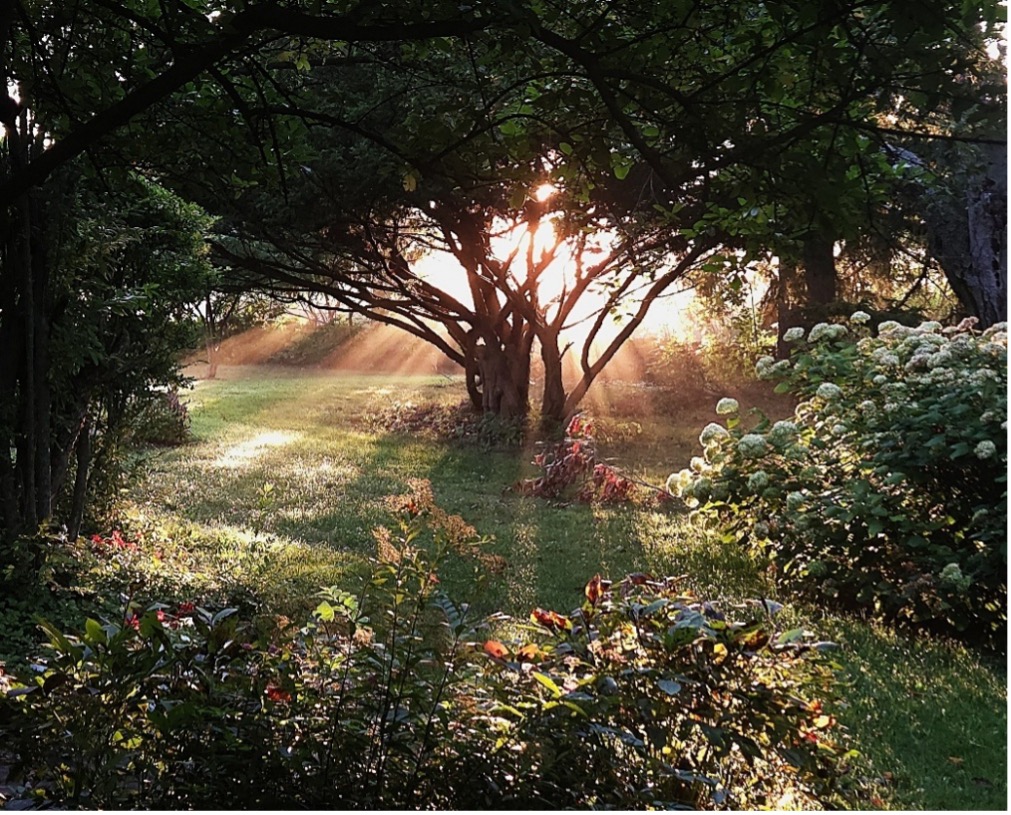
Photograph of Quarry Farm by Michael Czarnecki
Michael Czarnecki wrote his first poem as a junior in high school nearly 60 years ago and hasn’t stopped writing since. For over three decades he has made his living solely through the creative word. Michael has published 18 books and has given hundreds of readings throughout the country. In 2013 he embarked on a 14 week “Poems Across America” tour in which he gave a reading in each of the lower 48 states. As a photographer, many of his photos have been used on the cover of poetry books. Since 2014 he has been posting a daily photograph on Facebook as well as a daily spontaneous poem.
James Plath, Colwell Professor of English at Illinois Wesleyan University, is a recognized Hemingway and Updike scholar who taught Twain as a Fulbright Scholar in Barbados. Fascinated by old houses, he rehabbed his 1906 American Foursquare residence in Bloomington, Ill. and directed the renovation of The John Updike Childhood Home in Shillington, Pa., for which he also curated ten rooms of exhibits. He is the author-editor of eleven books, including The 100 Greatest Literary Characters and three books of poetry: Courbet, on the Rocks (White Eagle Coffee Store Press, 1994), Everything Shapes Itself to the Sea (Finishing Line Press, 2017), and At Quarry Farm (Kelsay Books, 2025).
Wednesday, May 27 in the Quarry Farm Barn
“The Politics of Illustrating Children in Twain’s Adaptation Network”
Maggie Morris Davis, Illinois State University
Across the 1885 illustrations of Adventures of Huckleberry Finn, a used 1960s mass-produced coloring book, and Philip Stead and Erin Stead’s The Purloining of Prince Oleomargarine (a children’s book adaptation of archival notes of a bedtime story that Mark Twain told his daughters), this talk will consider what these illustrations require of the child in poverty as well as what meaning this text invites a child reader to make. Most notably, Morris Davis will offer close readings of the illustrations within The Purloining of Prince Oleomargarine, to illuminate intersectional differences that might otherwise go unnoticed and that show—quite literally— a precise hierarchy of class and race even as authors and illustrators claim a politically neutral text.
Maggie E. Morris Davis, author of Reading the Classed Child: The Language of Depression-Era Children in Poverty (University of Georgia Press, 2026), is an assistant professor in the Department of English at Illinois State University. Her work has most recently been published in American Quarterly, Children’s Literature, and Resources for American Literary Study as well as several edited collections. Her research focuses on class and childhood/youth and how, as social constructions, representations of these concepts enter not only our language, culture, and literatures, but also shape our classrooms, curricula, and pedagogy. She first began writing what became this talk during the inaugural Quarry Farm Graduate Student Workshop in August 2022.
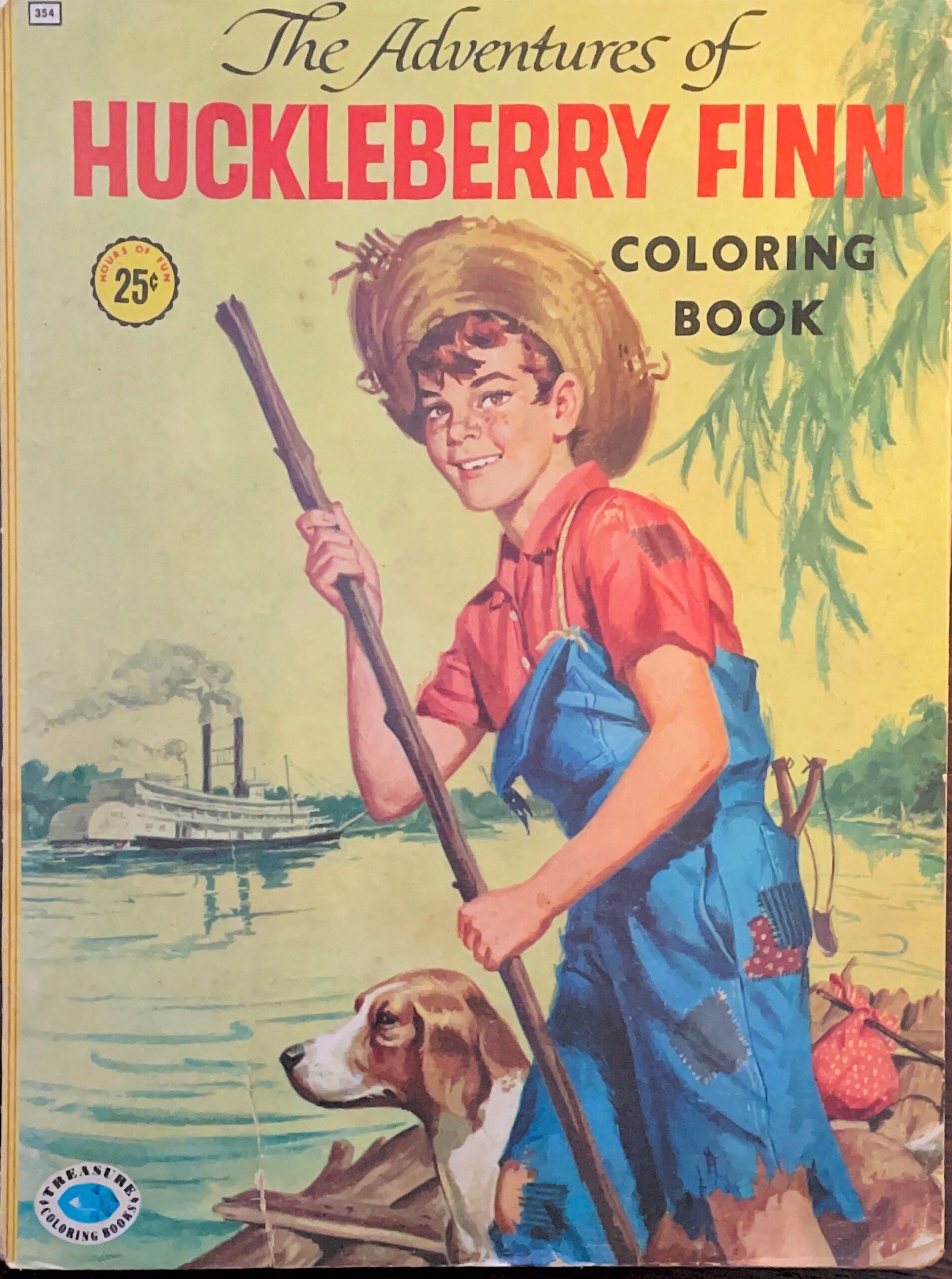
Cover of “The Adventures of Huckleberry Finn
Coloring Book” #354. Treasure Books, Inc. (1960)