2026 Quarry Farm Symposium “Black Childhood and Children’s Literature in the Nineteenth Century”
Starting in 2008, the Center for Mark Twain Studies has hosted a number of symposia on specific topics in Mark Twain Studies and other related fields. These symposia offer scholars the opportunity to spend a few days deeply delving into a specific aspect of the nineteenth-century. Several speakers, usually experts in their specific academic field, give papers throughout the gathering, often followed by roundtable discussions.
The thirteenth Quarry Farm Symposium tookk place on the property where Twain wrote most of his iconic works. Like previous symposia on, for instance, Abolition Studies and Energy Studies, the “Black Childhood and Children’s Literature in the Nineteenth-Century” symposium does not seek to center Mark Twain or his works in the proceedings, but merely to acknowledge that ongoing research and publication in this field is bound to facilitate better understanding of Twain’s life, work, legacy, and world, as is CMTS’s mission. Twain imagined the literary characters Tom Sawyer and Huckleberry Finn at Quarry Farm and these iconic representations of childhood have contributed to white children’s overrepresentation in American popular culture. Considering Black childhood in the nineteenth century adds essential context for understanding childhood during this era.
The Symposium was held on Friday, October 16 and Saturday, October 17 at historic Quarry Farm.

“The Banjo Lesson” by Henry Ossawa Tanner (1893)
Symposium image designed by Angelina Addison ’28
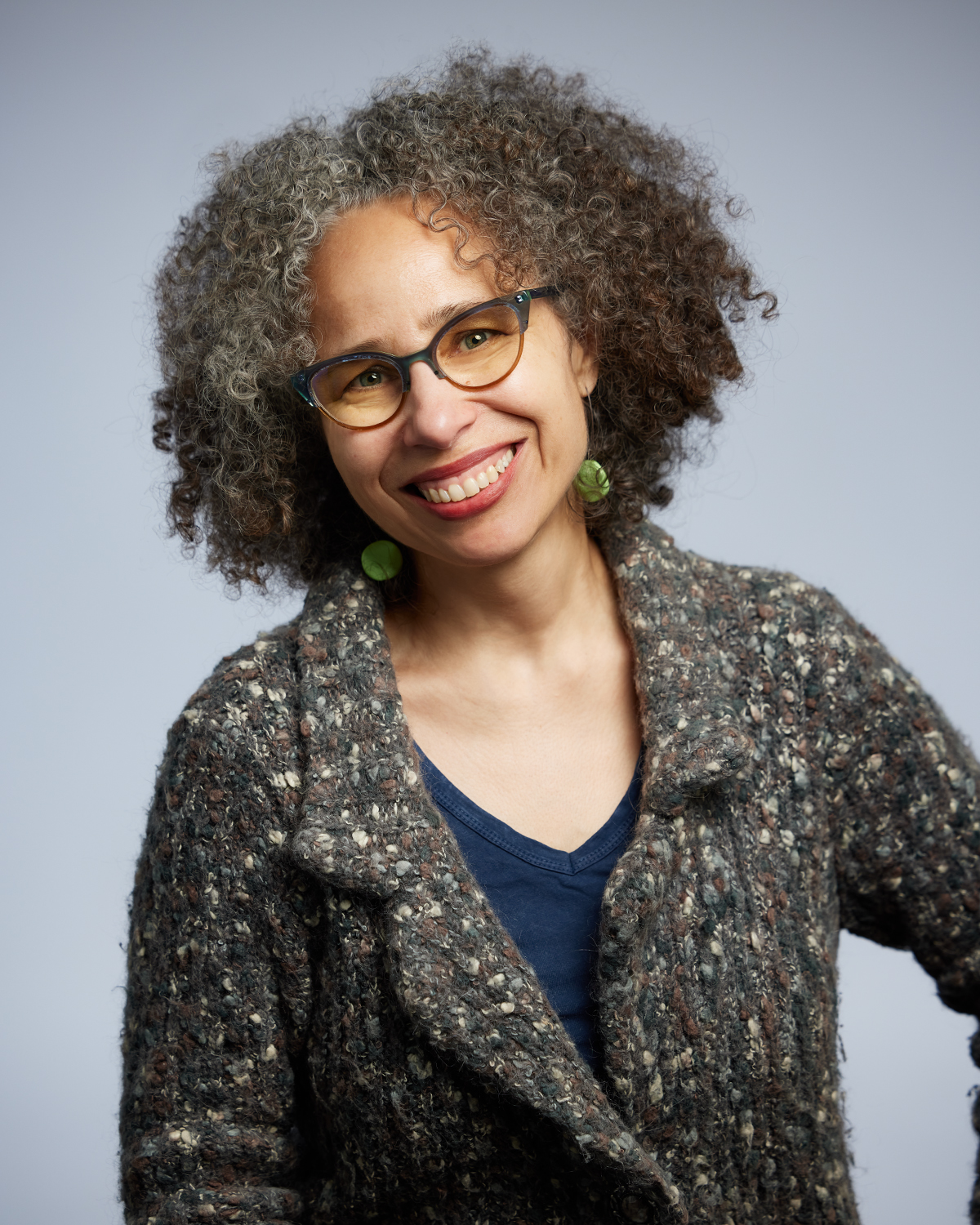
SYMPOSIUM CHAIR
Brigitte Fielder
Brigitte Fielder is a Professor in the College of Letters and Science at the University of Wisconsin-Madison. She is the author of Relative Races: Genealogies of Interracial Kinship in Nineteenth-Century America (Duke University Press, 2020) and co-editor of Against a Sharp White Background: Infrastructures of African American Print (University of Wisconsin Press, 2019). She has written a number of journal articles and chapters on early and nineteenth-century literature, particularly focusing on African American women writers and African American children’s literature, as well as some public-facing essays for venues such as Avidly (a channel of the Los Angeles Review of Books) and the New York Times Book Review. In addition to her recovery work with “Taught by Literature”, Brigitte currently co-edits J19: The Journal of Nineteenth-Century Americanists and is a co-coordinator of Just Teach One—Early African American Print, a digital recovery project hosted by the American Antiquarian Society. She is past president of the Children’s Literature Association.

KEYNOTE EVENT
Big Jim and the White Boy: An American Classic Reimagined: A Conversation with Marcus Kwame Anderson, Brigitte Fielder, and David F. Walker
Friday night’s keynote event will feature an interview with David F. Walker (author) and Marcus Kwame Anderson (illustrator) of Big Jim and the White Boy: An American Classic Reimagined, an invigorating new graphic novel adaptation of Mark Twain’s Adventures of Huckleberry Finn. The interview will be conducted by symposium organizer, Dr. Brigitte Fielder, whose research bridges intersections of nineteenth-century American literature and African American children’s literature, more broadly. This conversation will set the stage of our symposium’s presentations about and discussions of Black childhood and children’s literature in the nineteenth century and beyond. The interview will be followed by a brief Q&A session. Participants will have the opportunity to explore the shared investments in and stakes of children’s literature creators and scholars and to extend our academic discussions of historical Black children and texts to the present.

Marcus Kwame Anderson
Marcus Kwame Anderson was born in Kingston, Jamaica and moved to upstate New York at an early age. He is an illustrator and fine artist who has been creating art since I was able to lift a crayon. Much of his work is a representation of the beauty and diversity of the African Diaspora.
He graduated from S.U.N.Y. College at Fredonia with a degree in illustration. He is the co-creator of the comic book series, Snow Daze, and the illustrator of the all-ages detective series, Cash and Carrie and the Eisner Award winning graphic novel, The Black Panther Party: A Graphic Novel History, written by David F. Walker (Ten Speed Press, 2021). His most recent book is another collaboration with David Walker, the critically acclaimed Big Jim and The White Boy (Ten Speed Press, 2024).

David F. Walker
David F. Walker is the author of the graphic novel Big Jim and the White Boy: An American Classic Reimagined (Ten Speed Press, 2024). Among his many other publications Walker is also the Eisner Award-winning writer of The Black Panther Party: A Graphic Novel History (Ten Speed Press, 2021), co-creator of the Eisner Award-winning series Bitter Root (Image, 2018-2021), and author of the critically acclaimed YA novel, The Second Chance of Darius Logan (Scholastic Press, 2024).

PAPER PANEL #1
Allison Curseen, Boston College
“‘The Little Fairy Devils’: Reading Resistance in the Pleasures of Childhood’s Slavery Days”
This paper begins with the contention that at least one of the reasons that a certain class of nineteenth-century black narratives like Elizabeth Keckley’s, Booker T. Washington’s, and, in particular, Kate Drumgoold’s and Annie Burton’s remain relatively under discussed is because the narratives provide us with black protagonists who express positive attachments to their memories of captivity and even their captors. Such affections are uncomfortable to read for contemporary audiences; they challenge the narratives of wrong and right; acquiescence and resistance; bondage and freedom. Focusing on the childhood of Annie Burton and Kate Drumgoold, this paper does not wish to mitigate any of that discomfort, but rather it asks us to work within it. Examining the poetics of how Drumgoold’s describes her “white mother” and how Burton describes her mischievous romps with the other “little fairy devils” on the plantation, I argue that Burton’s and Drumgoold’s narratives ask us to attend to the way in which the black child’s movements complicate our narratives of slavery by forcing us to deal with difficult white black attachments; notions of black pleasure; and the possibility of the captive’s capacity for joy. And too to imagine these difficult elements as not outside of resistance but rather as being themselves alternative (if also childish) modes of resistance.
Allison Curseen
Allison Curseen is Assistant Professor of English and African & African Diasporic Studies at Boston College. Her teaching and research are focused on Black women writers and performance; 19th and 20th century African American literature and culture; Black girlhood; and Black ecstatic culture. Her most recent essays can be found in African American Review, Nineteenth Century Contexts, and Theater Survey. She recently completed Minor Moves; Black Girl and Unruly Performance in Antebellum Narratives (University of North Carolina Press, 2026).
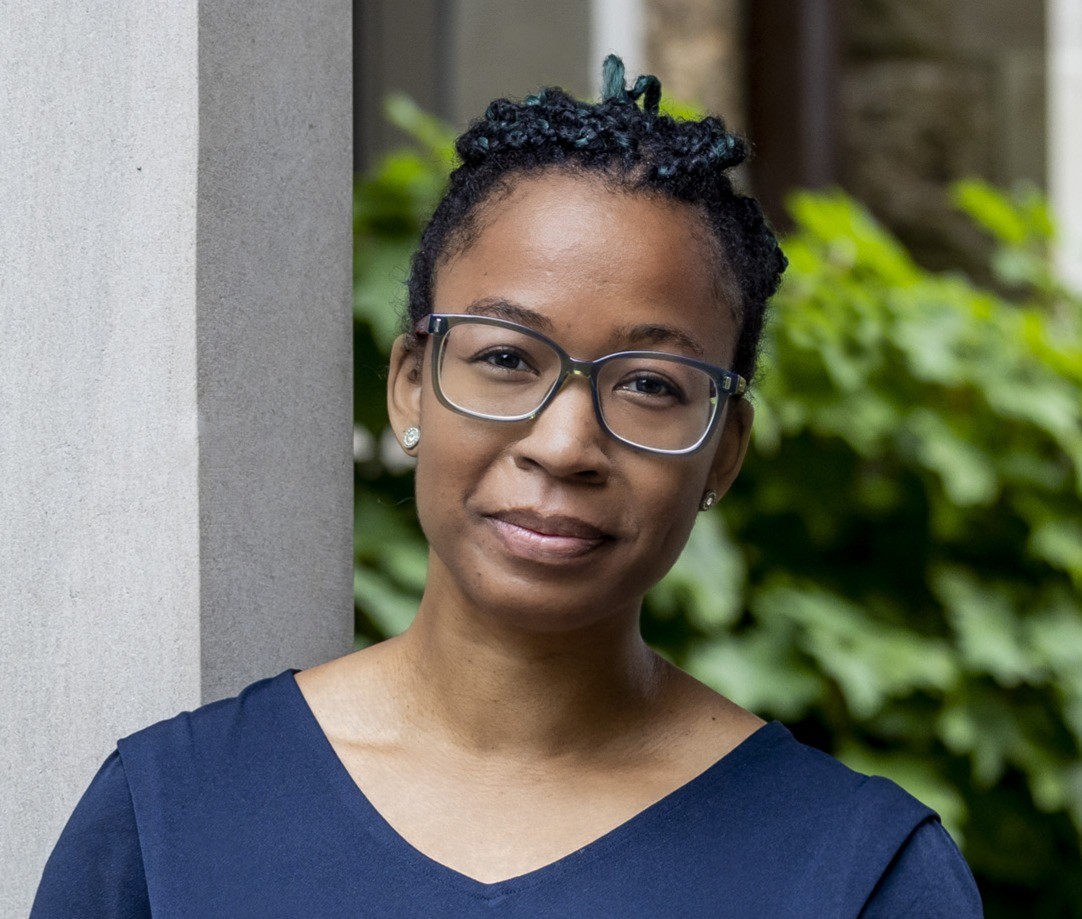
Sarah E. Chinn, Hunter College, CUNY
“‘A Jolly Crew’: Black Drummer Boys and the Right to Mischief”
This presentation explores the representation of Black boys who worked as drummers in the United States Colored Troops (UCST). Analyzing both visual images and textual sources, I contrast how while white boys were given wide latitude to misbehave, their Black counterparts — both enslaved and free — were closely watched and controlled. Ironically, enlisting in the UCST as drummer boys gave Black boys a space for what Thomas Higginson, the commander of the Carolina 2nd Regiment, called “mischief”: rowdy, rambunctious fun. In an unlikely environment, Black drummer boys provided a blueprint for what real freedom could look like after emancipation.
Sarah E. Chinn
Sarah E. Chinn teaches American Literatures and Cultures in the English Department at Hunter College, CUNY. Her work primarily explores questions of race, sexuality, and gender in U.S. literature and culture, particularly in the 19th century. She teaches a wide range of courses from Nineteenth Century Women Writers to Early American Drama to Literary Theory to Post-1945 Queer Narratives. She is the author of Technology and the Logic of American Racism: A Cultural History of the Body as Evidence (Continuum, 2000), Inventing Modern Adolescence: Children of Immigrants in Turn-of-the-Century America (Rutgers University Press, 2008), and Spectacular Men: Race, Gender, and Nation on the Early American Stage, 1780-1840 (Oxford University Press, 2017), the winner of the 2018 George Freedley Memorial Award for an exemplary work in the field of live theatre or performance, awarded by the Theatre Library Association and a Choice Outstanding Academic Title. She was awarded the American Literature Society’s 1921 Prize for best article in American literature in 2020. Her most recent book is Disability, the Body, and Radical Intellectuals in the Literature of the Civil War and Reconstruction (Cambridge University Press, 2024).
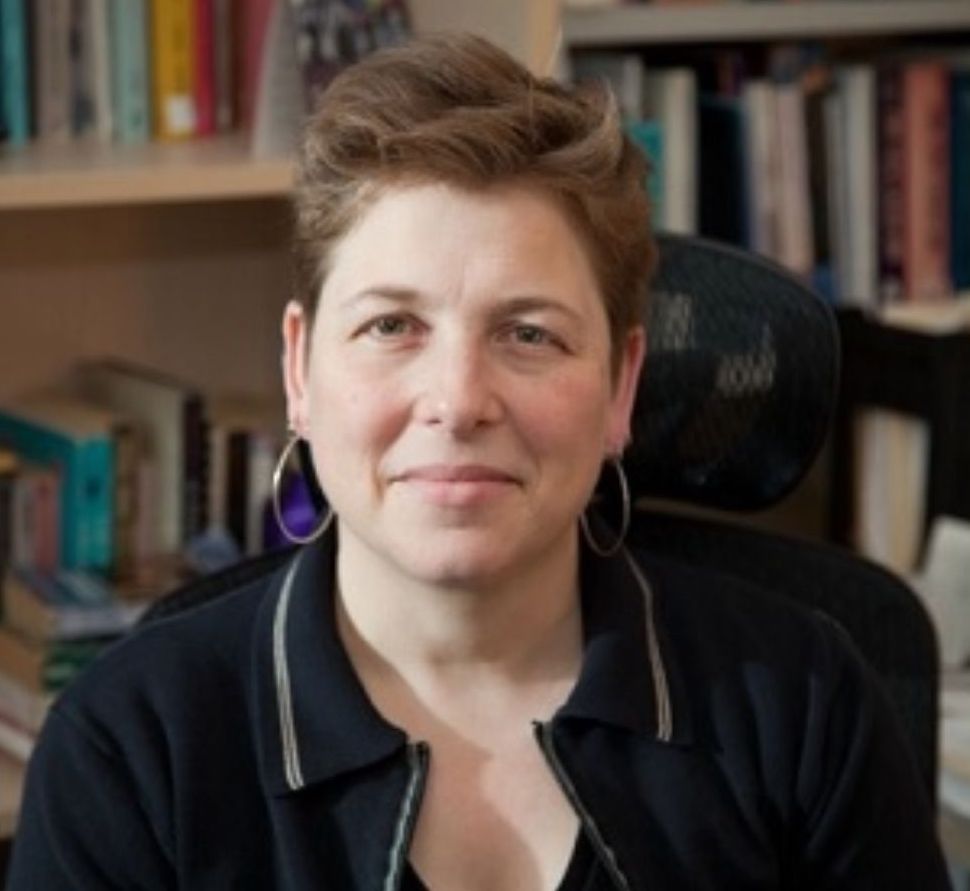
Brigitte Fielder, University of Wisconsin-Madison
“School Songs and Black Futures: Joshua McCarter Simpson and Educational Uplift”
Nineteenth-century African American activist, educator, and poet Joshua McCarter Simpson is perhaps best known for his anti-slavery songs. Some of these circulated as broadsides and also travelled – as songs do – in oral/aural popular culture. My paper will examine how Simpson’s ekphrastic folk songs about trains, especially, operated as vehicles for conveying us toward Black futures. Black children are ever-present in Black speculation about the future, not simply as constructed, but as key agents of and audiences for this work. I turn to Simpson’s songs to discuss how he used the metaphor of the train as a kind of techno-speculative apparatus for speculating about Black futures for new generations. In the spirit of the kinds of (proto)Afrofuturism with which I am interested, Simpson’s are one example of what Mark Dery describes as literature that “appropriates images of technology and prosthetically enhanced future” or a genre we might also identify as magical realism. When we consider also the educational context for Simpsons’ verses, we see both how Simpson’s writing dovetailed with his advocacy for Black children’s education throughout Ohio and how he directly addressed children in his work. In this, Simpson is one example showing how nineteenth-century African American intellectuals included Black children among the key audience for their writing.
Brigitte Fielder
Brigitte is a Professor in the College of Letters and Science at the University of Wisconsin-Madison. She is the author of Relative Races: Genealogies of Interracial Kinship in Nineteenth-Century America (Duke University Press, 2020) and co-editor of Against a Sharp White Background: Infrastructures of African American Print (University of Wisconsin Press, 2019). She has written a number of journal articles and chapters on early and nineteenth-century literature, particularly focusing on African American women writers and African American children’s literature, as well as some public-facing essays for venues such as Avidly (a channel of the Los Angeles Review of Books) and the New York Times Book Review. In addition to her recovery work with “Taught by Literature”, Brigitte currently co-edits J19: The Journal of Nineteenth-Century Americanists and is a co-coordinator of Just Teach One—Early African American Print, a digital recovery project hosted by the American Antiquarian Society. She is past president of the Children’s Literature Association.
PAPER PANEL #2
LaKisha Michelle Simmons, University of Michigan
“The Girlhood and Poetry of Angelina Weld Grimké”
Angelina Weld Grimké, born in 1880, inherited a complex history. Born into the “colored elite” after the failure of reconstruction, Grimké’s childhood was at once privileged and overdetermined. This paper briefly explores the Grimké archive and the story of Angelina Weld Grimké’s childhood to consider the ways in which black girl genius was nurtured and critiqued by her black elite family members. Drawing on new work in black childhood studies by Camille Owens and Allison Curseen, and scholarship centering care-work I ask, What does it mean to nurture/ care for black artistic and writerly genius? And how does “nurturing” genius interrupt or correspond with other forms of parenting (in the late nineteenth century)? How might we read Grimké’s childhood refusals and a cquiescence to her family’s expectations? How are black children implicated in the role of carer and cared-for? In thinking through some of these questions, I end by turning to a reading of Grimké’s poem, “The Grave in the Corner” published in 1893 when Angelina Grimké was thirteen years old.
LaKisha Michelle Simmons
LaKisha Michelle Simmons is Associate Professor of history and women’s and gender studies, and Arthur F. Thurnau Professor at the University of Michigan. She is the author of Crescent City Girls: The Lives of Young Black Women in Segregated New Orleans (University of North Carolina Press, 2015) and the co-editor with Corinne T. Field of The Global History of Black Girlhood (University of Illinois Press, 2022). She co-edited a special issue of Women, Gender and Families of Color on “Black Girlhood and Kinship” with Field (2019), and in 2021 co-edited a special issue of Hypatia: A Journal of Feminist Philosophy called “Conjure Feminism: Toward a Genealogy” alongside Kinitra Brooks and Kameelah Martin. Her recent articles on Black mothers and reproduction include, “Black Feminist Theories of Motherhood and Generation: Histories of Black Infant and Child Loss in the United States” in Signs: The Journal of Women in Culture and Society (2021) and “Pull the Sorry from Between My Legs: Lemonade as a Rumination on Reproduction and Loss” in The Lemonade Reader (2019). She is currently working on a book about reproduction and care work within Black Families in the long 19th Century.
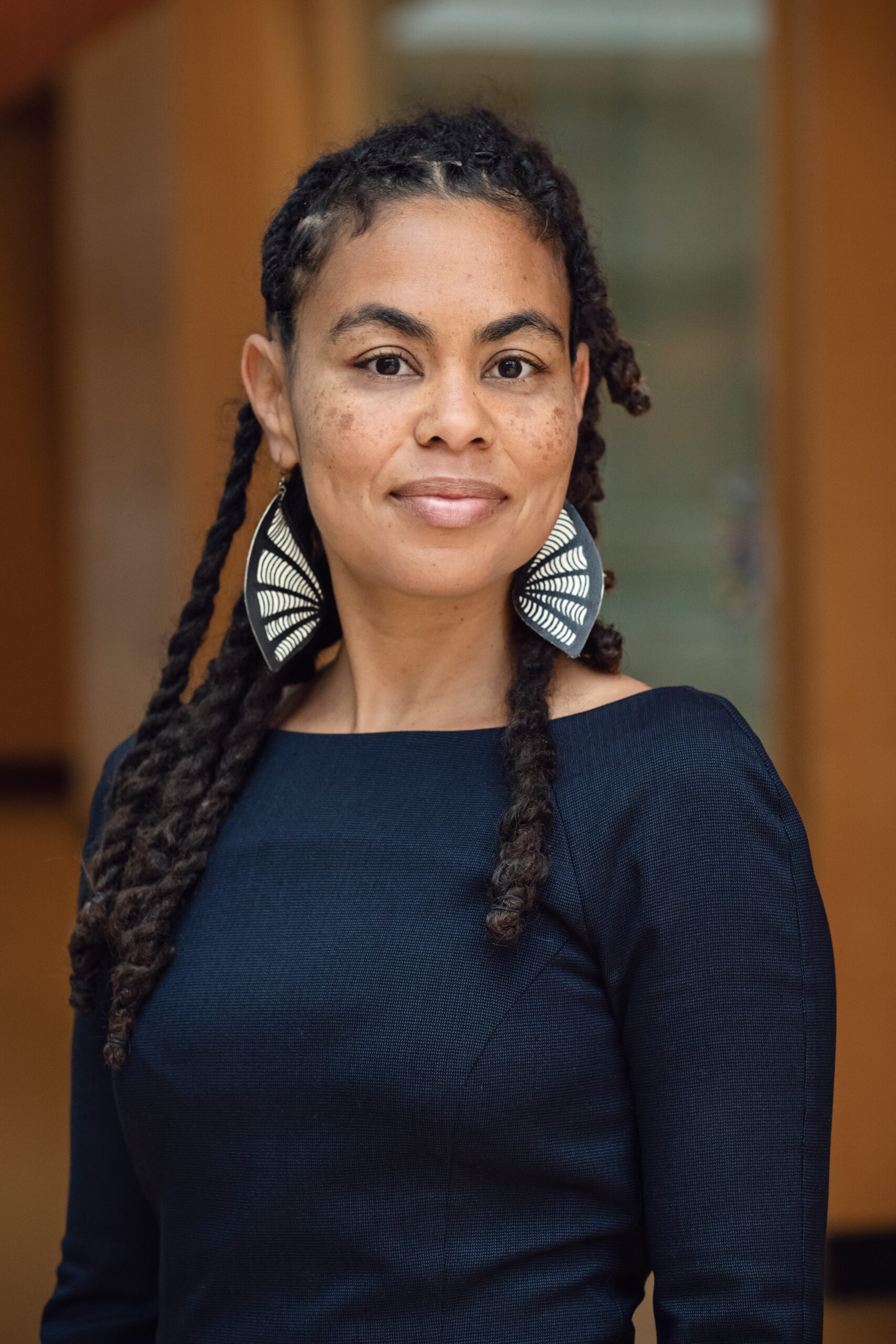
Denise Burgher, Pennsylvania State University
“Boys Play with Toys”
Author, activist, and educator Allison Dunbar Nelson was a prolific writer whose work deserves more attention than it has received. Straddling that critical time before the Harlem Renaissance which many historians believe begins officially between (1918-20) –Dunbar Nelson first published Violets and Other Tales in 1895, she is however rightfully very much an author of this time of Black literary efflorescence and significance. Publishing prolifically in numerous venues and forms at least until 1930 in the Pittsburgh Courier where she had a regular column up to just five years before she died, Dunbar’s’ work locates her as a product of the Harlem Renaissance while simultaneously considered an early Black women writer. This distinction has contributed to a muting of Dunbar’s importance both categorical and interpretively. Many of Dunbar Nelson’s early Black women author peers among them Victoria Earl Matthews, F.E.W. Harper, the much earlier Phillis Peters-Wheatley wrote about complex issues in nuanced ways which can confound contemporary audiences. Dunbar Nelson’s careful exploration of Black boyhood in the anthology, The Annals of ‘Steenth Street captures this beautifully in her short story, “His Heart’s Desire.”
Black childhood, a dominant theme in Dunbar Nelson’s oeuvre remains as contested and labile then as now. In so far as Blackness in western culture is as fungible as it is mobile, Dunbar Nelson rewrites, inverts and complicates simplistic and deeply racist conventions of Black boyhood in her depiction of Andy and his community. This paper explores Dunbar Nelsons’ depiction of Black boyhood in “His Heart’s Desire.” Her sharp observations remind us that though Black boyhood in America is loaded with thoughts, feelings, fears, racism, and angst, Black boyhood-its innocence, joy, pain, complexity and love-is real. And it exists both within, outside, and in conversation with these ideological structures through the character of Andy Benton and his family in “His Heart’s Desire.”
Denise Burgher
Denise Burgher completed her PhD in English at the University of Delaware, a MA in African American Studies from UCLA and BA in American studies with a minor in Women’s Studies from Trinity College, in Hartford, CT. She is Co-Director of the global transcribe-a-thon, Douglass Day, co-founder of the Black digital humanities project Taught by Literature and is the Long-term Director of Community Engagement for the Colored Conventions Project at Pennsylvania State University where she directs the curriculum committee. Her essay “Recovering Black Women in the Colored Conventions Movement” Legacy: A Journal of American Women Writers (2019) is widely taught. It is the only essay written by a graduate student to be assigned in this year’s History of the Book in America Seminar at the American Antiquarian Society. Her publications also include a widely adopted digital essay/exhibit “Before Garvey! Henry McNeal Turner and the Fight for Reparations, Emigration and Black Rights,” which she co-authored and curated. Her work has a visibility that is particularly rare for graduate students and early career scholars. In addition to invited talks and conference presentations, she has been asked to give keynote addresses at conferences at institutions such as Washington University, University of Pennsylvania, University of North Carolina, Greensboro, and UC Irvine, among others. Her dissertation is entitled Hidden Labor and Legacies: Black Women and Educational Activism in the Colored Conventions.
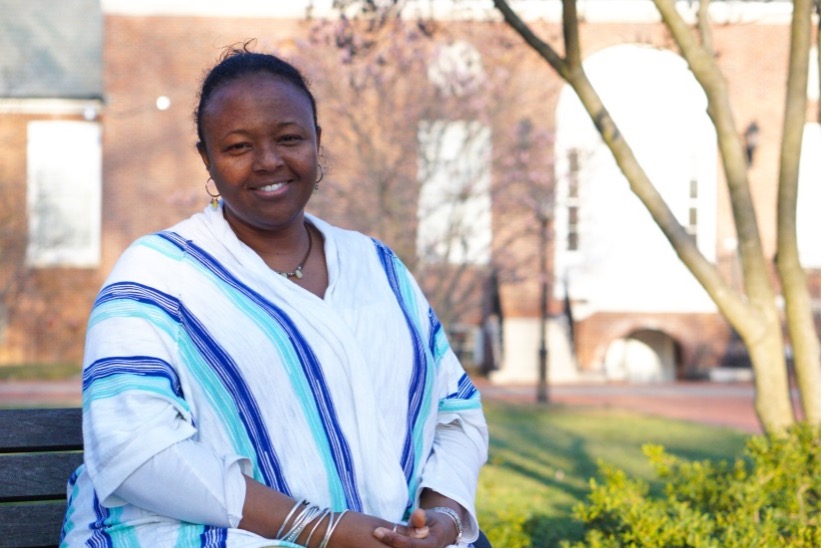
Tabitha Lowery, Coastal Carolina University
“Teaching Rest and Resilience: Harper, Dunbar, and the Moral Imagination in The Dunbar Speaker and Entertainer (1920)”
Before the advent of Alain Locke’s The New Negro (1925), which set the stage for new poets and writers such as Langston Hughes, Countee Cullen, and Zora Neale Hurston, Alice Dunbar- Nelson published The Dunbar Speaker and Entertainer in 1920. This pioneering anthology, marketed to Black youthful readers in schools and potentially community groups, envisioned a community of Black thinkers, creators, poets, and wordsmiths, united by the ideals of “self-reliance, noble striving, and ambition for high achievement” (Hull, “Forword”). Within its “Juvenile” section, Frances Ellen Watkins Harper’s “The Sparrow’s Fall” (1896) and Paul Laurence Dunbar’s “The Seedling” (1893) set the moral and educational tone for the volume. Read together, these poems lend each other creative agency and model mutual dependence, resilience, rest, and renewal. Harper’s meditation on divine care and mortality complements Dunbar’s call for perseverance and growth. Through this astute pairing, Dunbar-Nelson creatively imagines Black childhood as a site for moral and communal practice, borrowing these tenets from nineteenth-century poetry. Communal and moral practice teaches Black children to find strength in interdependence, shared cultural memory, and responsibility. Through her editorial parameters, Dunbar-Nelson repositions Harper and Dunbar as foundational voices in Black children’s literary instruction. This paper argues that though often overlooked, The Dunbar Speaker and Entertainer brings nineteenth-century poetry into an early twentieth-century movement that cultivates cultural self-definition and a literary education later celebrated in the Harlem Renaissance. Dunbar-Nelson reaches back to nineteenth-century literary texts to model strategies for moving Black children’s literature forward. In this light, the past becomes a resource for shaping Black childhood for new and experienced readers.
In recovering the potential readership for The Dunbar Speaker and Entertainer, it is imperative to follow Elizabeth McHenry’s call to “further complicate our understanding of early African American literacy by considering the literary activities of free Blacks and the legacy of the antebellum institutions that they built to promote reading and share texts”. Through this lens, Dunbar-Nelson’s anthology extends that legacy, showing how moral instruction, resilience, and divine care became foundational to the development of Black children’s literature.
Tabitha Lowery
Tabitha Lowery is an Associate Professor of English and Associate Director of the Charles Joyner Institute for Gullah and African Diaspora Studies at Coastal Carolina University. Within the English Department, she teaches courses in African American literature, and her research interests include early Black authors and reception histories, print culture, and Black speculative fiction. She recently developed a course module on Gullah Geechee Foodways as part of a Mellon Foundation-funded project. Her scholarship appears in ESQ: A Journal of Nineteenth-Century American Literature, as well as Teaching Black Speculative Fiction (Routledge, 2024), and she has a forthcoming chapter in Phillis Wheatley Peters in Context (Cambridge University Press).
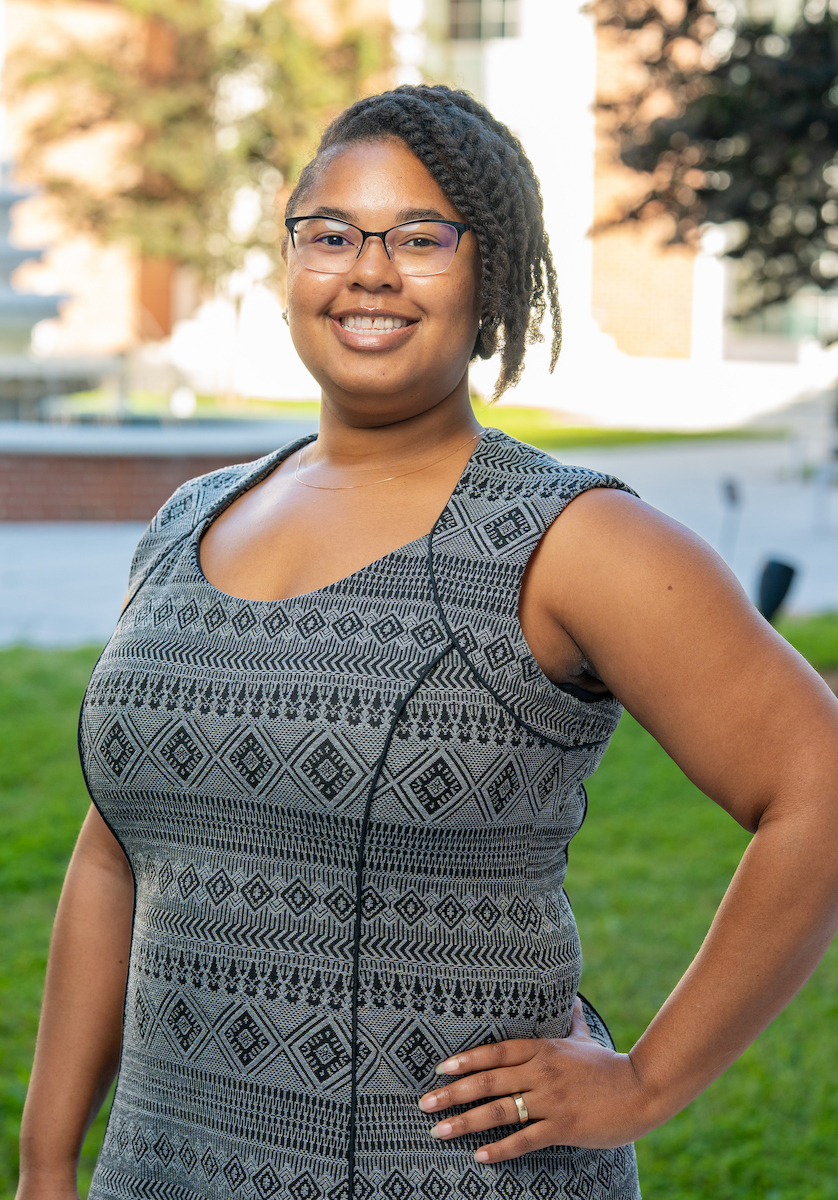
PAPER PANEL #3
Katharine Capshaw, University of Connecticut
“Envisioning the 19th Century for Children of the Harlem Renaissance”
While the 1920s and 1930s was the era of the “New Negro,” focused on cultural reinvention, modernity, and urban experience, many writers and artists for young people insisted on the significance of the past to new iterations of progressive identity. My presentation will explore illustrations of 19th century figures and scenes issued to young people across a variety of venues: in the pages of W.E.B. Du Bois and Jessie Fauset’s landmark periodical, The Brownies’ Book (1920-1921); in children’s books issued by Carter G. Woodson, the “Father of Black History,” through his Associated Publishers; and in the earliest issues of the Negro History Bulletin, founded in 1937 by the Association for the Study of Negro Life and History. Illustrations make clear the dynamic relationship between the past and the present, bringing to life the 19th century Black cultural heroes and milestone events that would shape Black childhood and its commitment to social progress in the years before World War II.
Katherine Capshaw
Katharine Capshaw is Professor of English, American Studies, and Women’s, Gender, and Sexuality Studies at the University of Connecticut. Her books, Children’s Literature of the Harlem Renaissance (Indiana University Press, 2004) and Civil Rights Childhood: Picturing Liberation in African American Photobooks (University of Minnesota Press, 2024), as well as her co-edited Who Writes for Black Children? African American Children’s Literature before 1900 (University of Minnesoata Press, 2017), have each won the “best scholarly book” award from the Children’s Literature Association. Her new book, The Poetry and Political Writings of Bessie Woodson Yancey, Sister to Carter G. Woodson, is forthcoming in 2027, and she is at work on a monograph focused on Black children’s theatre of the 1970s.
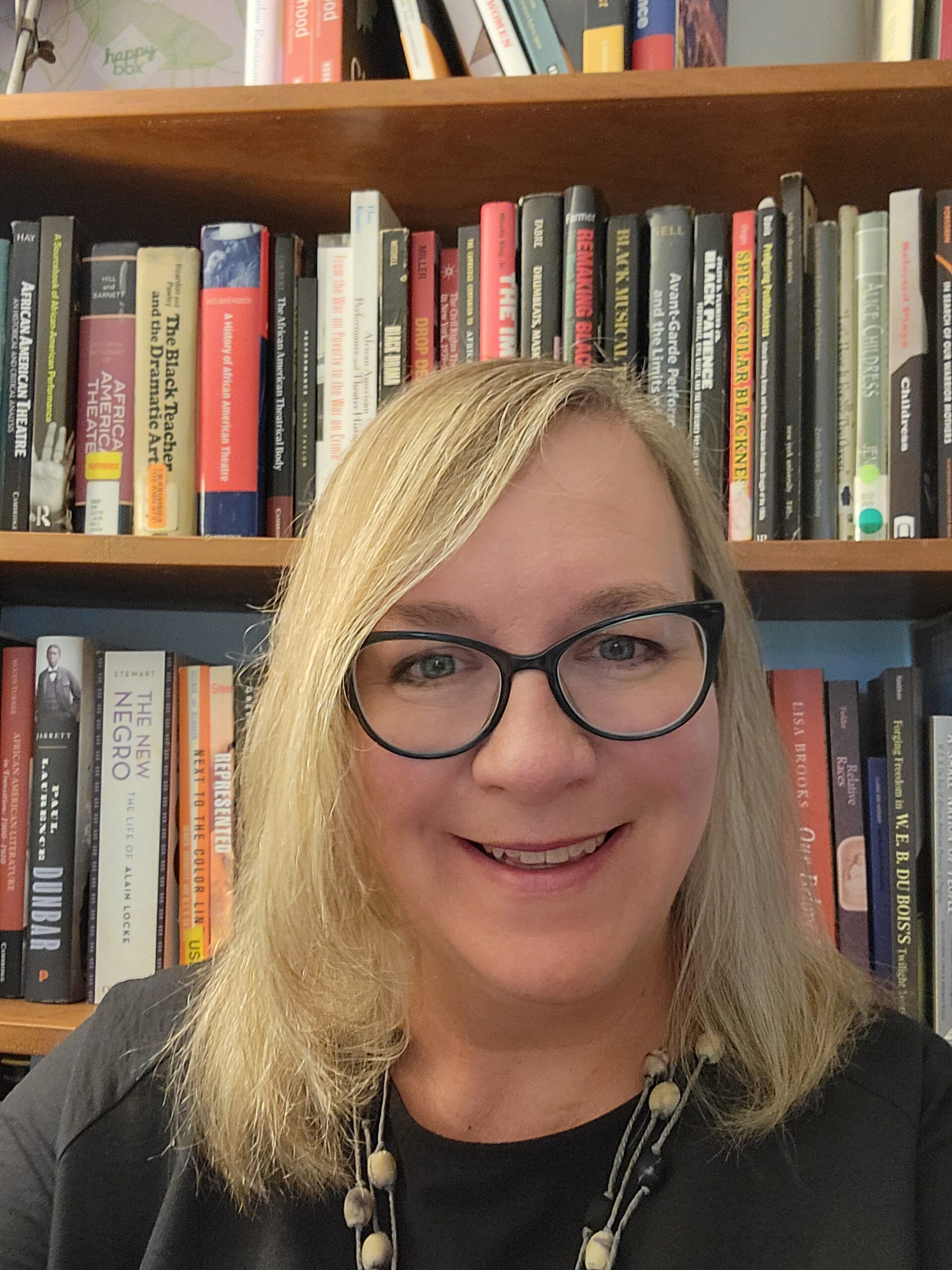
Paige Gray, Savannah College of Art and Design
“Bloom Literature: The Cultivation of Young Black Writers, a Youth Literature, and Intergenerational Collaboration in Early Twentieth-Century Newspapers”
If you want to explore the nuances of African American children’s literature, you must begin with the newspaper.
Scholars such as Karen Chandler, Nazera Sadiq Wright, Brigitte Fielder, Eric Gardner and others have argued that a discernable literature for Black American children first shows itself among the pages of Black press publications during the nineteenth century and continues to do so into the twentieth as opportunities for publishing literature for Black children by Black authors in book form remained limited.
In addition to adult-driven discourse related to family and the well-being of children, some Black weeklies of this period also published submissions from young people amid its pages, thus allowing for the creation of intergenerational discourse within the complete editions of various newspapers. Taken collectively, I see these young people’s letters and creative works as part of distinct body of literature written by Black children and young adults and published in periodicals read by a predominantly Black audience during the twentieth century, a literature I call bloom literature. In creating a literature for themselves that harnessed the influence of the Black press during the twentieth century, Black young people enact later-articulated philosophies of community-care networks authored by Black feminist writers such as bell hooks, Patricia Hill Collins, and June Jordan. Through informal alliances with Black press newspapers, these young people create supportive textual communities that, to use June Jordan’s words, encourage them to “bloom in their own place and time like the tiger lilies growing beautiful and free.”
My talk centers the writing of Black young people published in Black press newspapers such as the Chicago Defender, the Pittsburgh Courier, and Baltimore’s Afro-American during the 1920s in order to expand ideas of African American children’s literature beyond the book and challenge how we understand youth literature at a category.
I argue that the unstable and unsettled category of youth literature must make room for literature by actual youth. But in making this wider claim through the narrow focus of writings by Black American young people in twentieth-century periodicals, I put forward a case for intergenerational collaboration using a lens of Black feminism. My aim is not only to disrupt aetonormativity, but also recalibrate theoretical frameworks of youth literature away from predominantly Eurocentric approaches that reify existing hegemonic models of power.
Paige Gray
Paige Gray, a Professor of writing and liberal arts at the Atlanta campus of the Savannah College of Art and Design, approaches the study of young people’s texts and cultures as a means to explore the cultural construction of youth and the power dynamics within that construction. Her work has appeared in academic journals such as Children’s Literature, Jeunesse, and Children’s Literature Association Quarterly, as well as popular press outlets including Time.com, the Chicago Tribune, and The Conversation, among others. She’s the author of Cub Reporters: American Children’s Literature and Journalism in the Golden Age (SUNY Press, 2019) and the forthcoming Children of the Black Press: How Young People Helped Create an African American Youth Literature (The Ohio State University Press).

Norrell Edwards, Le Moyne College
“Fighting Racism in a Zombie Apocalypse”
During the early aughts into the 2010’s, zombies garnered feverish attention in US media and film. TV shows like The Walking Dead alongside a spat of zombie films such as I Am Legend, Zombieland, and Shaun of the Dead imagined bleak apocalypses. However, these zombie representations were often divorced from their racial origins. Justina Ireland’s 2018 YA novel Dread Nation expands the neo-slave narrative cannon while simultaneously reconnecting the zombie trope to enslavement. In Dread Nation, the U.S. is besieged by zombies, called shamblers in the midst of the Civil War. The novel’s Native and Negro Reeducation Act demands Black and Indigenous children attend combat schools preparing them for a life of servitude, protecting White Americans. As Dread Nation shows, in any century, when the U.S. is threatened with existential crisis–Black bodies are first to be sacrificed for collateral. Black children are no exception. This paper will build from existing scholarship on Dread Nation alongside Christina Sharp’s theory of the wake.
Norrell Edwards
Norrell Edwards is a scholar, educator, and communications consultant for nonprofit organizations. Dr. Edwards is currently 75th Anniversary Endowed Professor of the Humanities, Assistant Professor of English at Le Moyne College in Syracuse, New York, and Project Director of the National Endowment of the Humanities funded Grant “Publishing Today: Uplifting Contemporary Stories and Literature of Marginalized Communities.” Dr. Edwards is a scholar of contemporary Black diasporic literature and her work has intersected with issue areas like criminal justice reform, advocacy and policy, Black history and culture and social justice. With extensive scholarship on the Haitian diaspora, Dr. Edwards has published in several academic journals and edited collections as well as essays in LA Review of Books, Electric Literature, The Grio and Yes! Dr. Edwards is board chair of The Feminist Press and a board member of Lampblack Literary. She received her PhD from the University of Maryland College Park and her Bachelors in English Literature from CUNY’s Macaulay Honors College at Hunter College.

ROUNDTABLE ON BIG JIM AND THE WHITE BOY: AN AMERICAN CLASSIC REIMAGINED
Karen Chandler
Karen Chandler is a scholar of African American, American, and children’s literature and Professor of English at the University of Louisville. She examines literary form and genre; Black vernacular, literary and film traditions; conceptions of identity and place; and sociohistorical contexts for literature and film. Her scholarship appears in such top-ranked journals as The Lion and the Unicorn and Research on Diversity in Youth Literature, and in the essay collections Literary Cultures and Twentieth-Century Childhoods (Routledge, 2020) and Who Writes for Black Children? African American Children’s Literature Before 1900 (Univeristy of Minnesota Press, 2017). Her monograph, Tending to the Past: Selfhood and Culture in Children’s Narratives about Slavery and Freedom (University Press of Mississippi, 2024), explores Black children’s book authors’ and filmmakers’ revisionary use of conventions of historical fiction to tell stories about Black survival during the eras of slavery and Reconstruction. Teaching Black Speculative Fiction: Equity, Justice and Antiracism (Routledge, 2024), which she co-edited with Education professor Dr. KaaVonia Hinton of Old Dominion University, includes sixteen essays that provide pedagogical support to pre- and in-service middle- and high-school teachers who have adopted (or might adopt) Black science fiction, fantasy, and horror narratives for their classrooms. In addition, she has co-edited special journal issues of Children’s Literature Association Quarterly (with Dr. Sara Austin) and International Research in Children’s Literature (with Dr. Michelle H. Martin). These special issues, along with her peer-reviewed essays, book chapters, public and scholarly lectures, and conference presentations, contribute to a rich scholarly discourse on children’s literature and African American literary traditions.
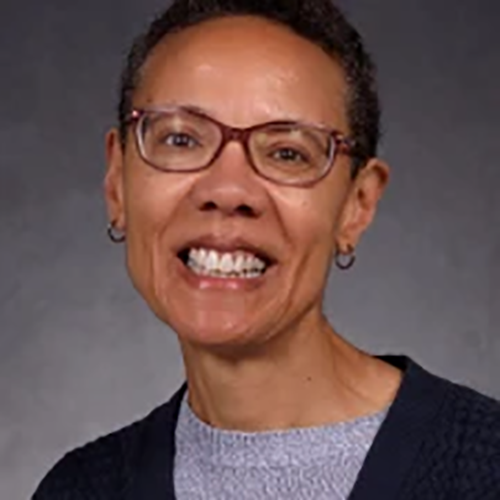
Ann M. Ryan
Ann M. Ryan is Professor of American Literature at Le Moyne College in Syracuse, New York. She is the past president of the Mark Twain Circle, the former editor of The Mark Twain Annual , and co-editor of Cosmopolitan Twain (University of Missouri, 2008) . She is the author of The Ghosts of Mark Twain: A Study of Manhood, Race, and the Gothic Imagination (University of Missouri, 2025).

Maude Hines
Maude Hines is Professor of English at Portland State University, where she teaches courses in American literature, with special focus on African American literature and critical childhood studies. She has just completed a four-year term as chair of the Black Studies department, and is a former president of the Children’s literature Association and a Fulbright alumna. Her work has appeared in American Quarterly, Children’s Literature, The Lion and the Unicorn, College Literature, and various anthologies. She has just embarked on a sabbatical to wrap up her book project, Slavery’s Ghosts, about the role of children and childhood in gothic explorations of slavery’s legacy throughout the twentieth century.