
Michael J. Kiskis Quarry Farm Fellowship

Michael died suddenly on May 8th, 2011, leaving behind a record of insightful, original scholarship on the life of Mark Twain, which is rivaled only by the enduring legacy of his teaching. When asked once about what guided his work as a professor, he recalled his mother’s “simple statement of principle”: “You learn and you use that learning to make your way. And you pay back, and make sure that others make their way.” Michael Kiskis devoted his life to that principle, encouraging young scholars to develop their talents, to hone an original voice, and to use that voice to change the world.
The Michael J. Kiskis Quarry Farm Fellowship was established to honor Michael’s legacy as a scholar and a teacher. Through the resources of this fellowship, the Center for Mark Twain Studies will continue the legacy of Michael J. Kiskis, by supporting the critical and creative work of emerging scholars in the field of Mark Twain Studies.
- Recipients of the Michael J. Kiskis Quarry Farm Fellowship will receive an additional $500 to their Quarry Farm Fellowship honorarium.
- All graduate students, recently minted Ph.D. academics, and creative writers new to the field of Mark Twain Studies who have already been accepted to the Quarry Farm Fellowship program are eligible.
- The selection committee will prioritize Quarry Farm Fellows working in the field of biography and/or autobiography, but all emerging scholars and writers are eligible.
Michael J. Kiskis Quarry Farm Fellowship Selection Committee
- Ann Cady, Chairperson of the Michael J. Kiskis Memorial Endowment; wife of Michael J. Kiskis
- Joseph Lemak, Director of the Center for Mark Twain Studies
- Ann Ryan, Professor of English at Le Moyne College
Selected Publications of Dr. Michael J. Kiskis
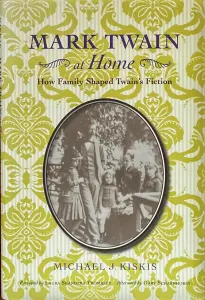
Mark Twain at Home: How Family Shaped Twain’s Fiction. Tuscaloosa: University of Alabama Press. June, 2016
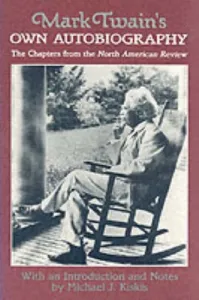
Mark Twain’s Own Autobiography: The Chapters from the North American Review. Second Edition, with a new introduction. Madison: University of Wisconsin Press. February, 2010.
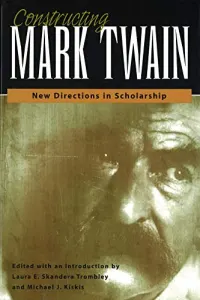
Constructing Mark Twain: New Directions in Scholarship. Eds. Michael J. Kiskis and Laura Skandera-Trombley. Columbia: University of Missouri Press, 2001.
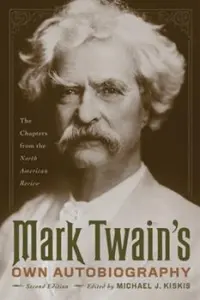
Mark Twain’s Own Autobiography: The Chapters From the North American Review. Madison: University of Wisconsin Press, 1990: with notes and critical introduction; Special Library Edition. Newport Beach: Books On Tape, Inc., 1992.
Selected Academic Journal and Book Chapter publications
- “Mark Twain and the Accusing Angel: ‘The Chronicle of Young Satan’ and Sam Clemens’ Argument with the Inscrutable,” for Centennial Essays on Mark Twain’s Mysterious Stranger, Edited by Joseph Csicsila and Chad Rohman. Columbia: University of Missouri Press, 2009: 105-126.
- “A Room of His Own: Samuel Clemens, Elmira, and Quarry Farm,” Cosmopolitan Twain, eds. Ann Ryan and Joe McCullough. University of Missouri Press, 2008: 233-253.
- “Dead Man Talking: Mark Twain’s Autobiographical Deception,” American Literary Realism. Vol. 40, No. 2 (Winter 2008): 95-113.
- “Hank Morgan’s Asylum: A Connecticut Yankee and a Record of Loss, “ Modern Language Studies, Vol. 36, No. 2 (Winter 2007): 77-87.
- “Critical Humbug: Adventures of Huckleberry Finn,” Mark Twain Annual, No. 3 (2005): 13-22.
- “Samuel Clemens and Me: Class, Mothers, and the Trauma of Loss,” Quarry Farm Papers, Number 8. Elmira: Center for Mark Twain Studies, 2002.
- “Mark Twain and the Tradition of Literary Domesticity,” in Constructing Mark Twain: New Directions in Scholarship. eds. Laura Skandera Trombley and Michael J. Kiskis. Columbia: University of Missouri Press, 2001: 13-27.
- “‘When I read this book as a child, the pain was shifted aside’: Teaching Huckleberry Finn to Non-Traditional Students,” in Making Mark Twain Work in the Classroom, James Leonard, ed., Durham: Duke University Press, 1999: 292-307.
- “Mark Twain and Collaborative Autobiography,” Studies in the Literary Imagination, Vol. XXIX, No. 2 (Fall 1996): 27-40.
- “Coming Back to Humor: the Comic Voice in Mark Twain’s Autobiography.” in Mark Twain’s Humor: Critical Essays. Ed. David E. E. Sloane. New York: Garland Publishing Co., 1993: 541-569.
Past Recipients
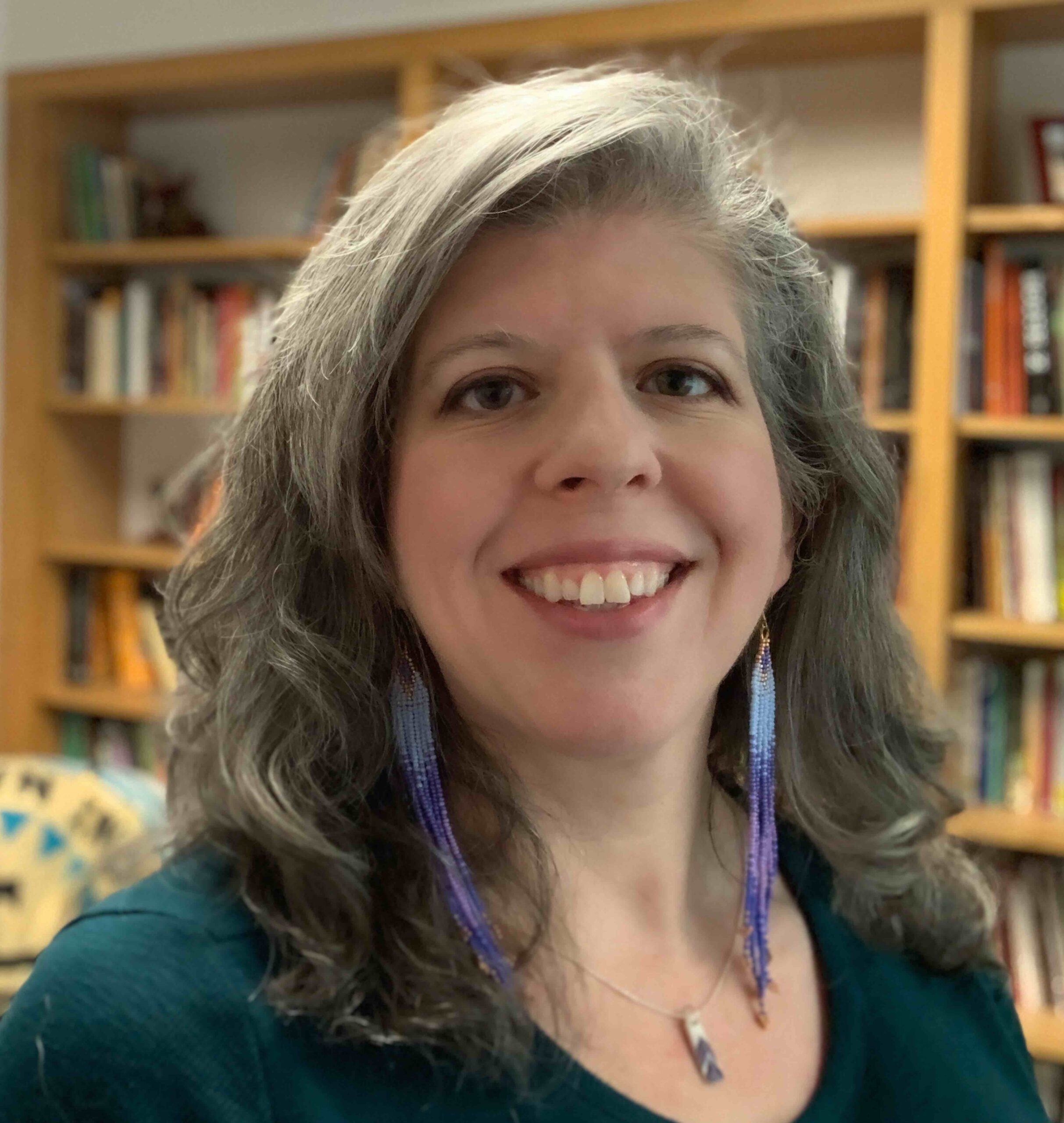
Rebecca Pelky (2026)
Rebecca Pelky is the author of two poetry collections: Through a Red Place (2021), winner of the Perugia Press Prize, and Horizon of the Dog Woman (Saint Julian Press, 2020). She has also co-translated, with Jake Young, a book of sonnets by Chilean poet Matilde Ladrón de Guevara, entitled Naked/Desnuda (Redhawk Publishing, 2022). A citizen of the Brothertown Indian Nation, her poetry interrogates historical and contemporary issues faced by Indigenous peoples in the United States. She is the recipient of a 2023 Literature Fellowship from the National Endowment for the Arts. Her recent work has been published in The Laurel Review, The Yellow Medicine Review, and Cutbank, among others. As an Assistant Professor of English at Le Moyne College, Pelky teaches creative writing and Native American literatures.
My interest in Mark Twain is part of a larger creative project which reimagines, through poetry, the opinions and works of some of America’s greatest literary minds, specifically as those works and opinions relate to Indigenous peoples. My project seeks neither to redeem nor condemn the writers or their works, but rather to reconsider them through the lens of an Indigenous perspective. Besides Twain, other writers will include William Wadsworth Longfellow, James Fenimore Cooper, and Lydia Huntley Sigourney. While my primary goal is to write poetry, I also hope to build a longer essay from my experiences of staying at Quarry Farm. Perhaps it will be “A Midwestern Indian in Mark Twain’s Home,” similar in style and theme to Twain’s own novel, A Connecticut Yankee in King Arthur’s Court.
This project will advance a trend in my recent poetry, which has largely been the product of historical research. My methodology involves engaging with archival materials, historic sites, and genealogical research. For example, I recently spent time at the US Army Barracks in Carlisle, Pennsylvania, and the nearby Cumberland County Historical Society to interact with the spaces and archives of the former Carlisle Indian Industrial School, where my great-grandfather was an unwilling student. By interacting with these spaces and archives, I was able to produce several poems for my current manuscript. My plan is to engage with Mark Twain’s spaces, writings, and records, in similar ways.

Aliza Theis (2025)
Aliza Theis is a PhD student in English at UC Berkeley. Her research focuses on nineteenth-century intellectual history, print culture, landscape, and coloniality. Aliza received a Master’s in Education from Harvard GSE and taught high school English for seven years in Brooklyn and San Francisco. In addition to classroom teaching, Aliza served as Dean of Curriculum and Instruction, English Department Chair, lead lesson planner, and instructional coach.
Toward the end of Pudd’nhead Wilson, after the first day of trial, Tom Driscoll—who thinks he is a white enslaver but was actually born as a slave—boasts that his crime will “take its place with the permanent mysteries” (329). In a revision, Twain added, “and people won’t get done trying to guess out the secret of it for fifty years” (329). These quotes seem prescient given the decades of scholarship that have attempted to inspect Pudd’nhead Wilson and Those Extraordinary Twins (published together in 1894) for some deeper truth about Mark Twain and his post-Reconstruction mindset. A survey of critical responses reveals how we yearn to both understand what Twain was up to in publishing these linked stories and pin down what they say specifically about race. My project argues that Twain himself invites both of these inquiries—and gestures at how they might be mutually constitutive. At Quarry Farm, I will develop my article, currently titled “The Inspection of Race and the Detection of Authorship in Mark Twain’s Pudd’nhead Wilson and Those Extraordinary Twins,” and examine the relationship between racial and authorial identity making in the combined works. Drawing from the Mark Twain Project and UC Press’s recent “Authoritative Edition,” I will probe the works’ textual history to show how Twain positions his authorship as the subject of detection.

Charline Jao (2024)
Charline Jao is a PhD candidate in the Department of Literatures in English at Cornell University. Her research broadly focuses on grief, print culture, and gender in the American nineteenth century. Her dissertation, “Early Lost,” looks at the temporality of child death and separation in texts by nineteenth-century American women writers, with an emphasis on events not easily absorbed into sentimentalism or nation-making such as infanticide and abandonment. Jao is the creator of two digital humanities projects: Periodical Poets, a catalogue of poetry published in New York City periodicals run by Black editors in the nineteenth century, and No Stain of Tears and Blood, a collection of material related to the abolitionist free labor/free produce movement. Her research has been supported by the Cornell Rural Humanities Initiative, The Center for Mark Twain Studies, and the American Antiquarian Society.
Between November 7, 1870 and June 2, 1872, Samuel and Olivia Clemens’ letters are filled with updates and reports on their firstborn son, Langdon, whose premature birth and constant sickness filled both parents with constant anxiety. The couple’s worry would eventually prove true, as Langdon died of diathermia at nineteen-months old – a death made even more tragic for the Clemens’s inability to travel to Elmira for Langdon’s burial. My proposed project, titled “‘I was not due here’: Samuel L. Clemens’ Letters for Langdon,” examines Samuel Clemens as a father, reflecting on Clemens’ understanding of and encounter with Langdon’s precarious infancy and the significance of Quarry Farm during his bereavement. Thus, I turn to Clemens’ Langdon letters, reports where Clemens writes from the perspective of his infant son, which combine humor and imagination with a desire to report on the state of the family. My project argues that these letters which recount the Clemens’s first experience with parenthood provide a less-explored archive and insights into studies of Twain and childhood. By looking at microfilm of these letters and texts for and about children (and childhood more broadly) from Clemens’ library, I aim to consider the way that narrative and the imitation of infant “language” (particularly speech and the act of writing) functions in these letters.